I’ve been fascinated by the mysterious for as long as I can remember. As a child, I was drawn to anything that felt a little magical, a little unseen — the occult, the supernatural, the questions science couldn’t yet answer.
So when I first learned about Reiki, I was instantly intrigued.
Healing? With my hands?
What in the world was this all about?
Could I actually be a healer?
I had to know more.
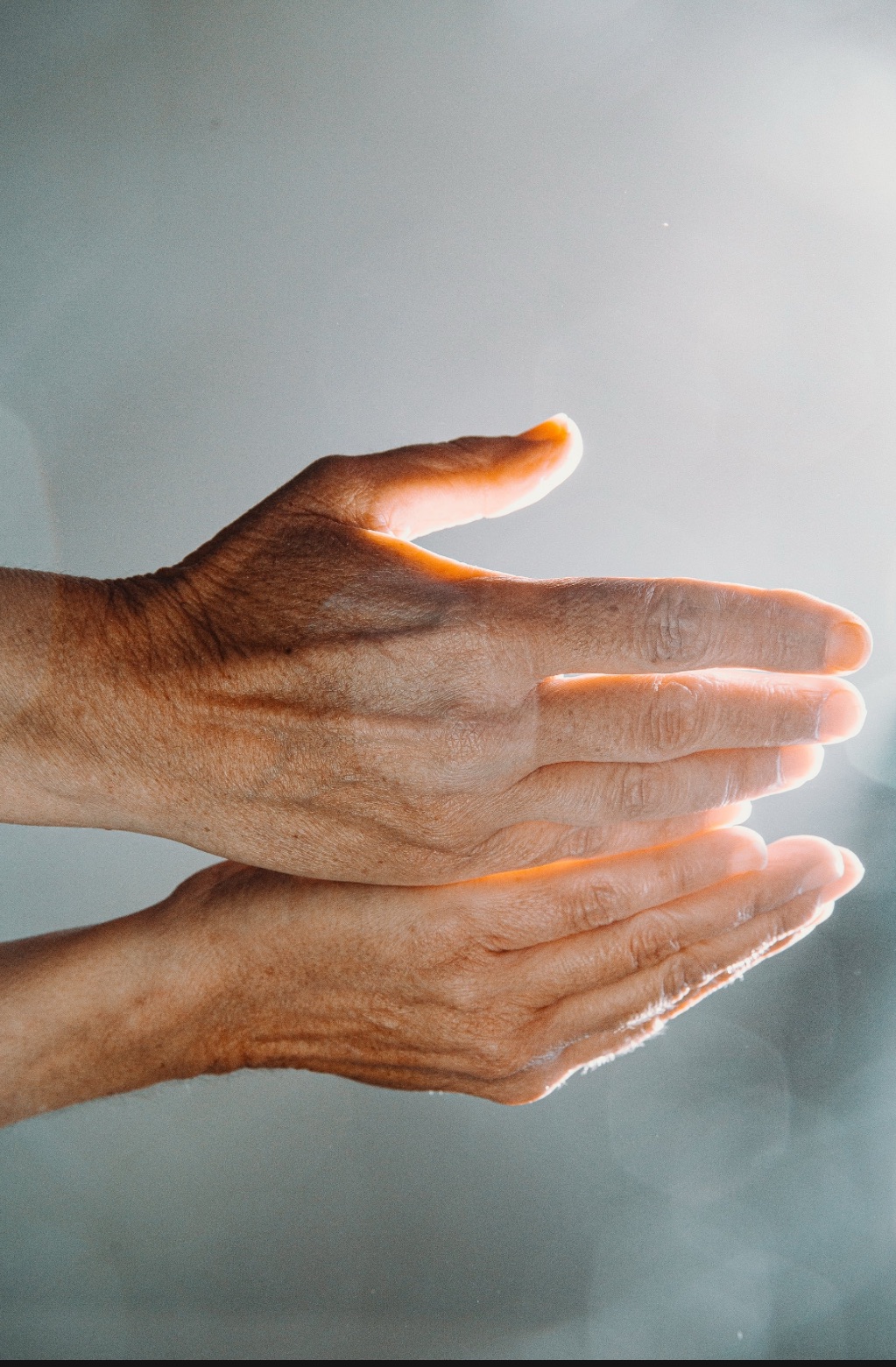
As I began my Reiki training, I was fascinated by what I experienced. I could feel energy moving through my hands. I learned how to ground, how to move energy through my own body, and — almost unbelievably — I could feel that same energy moving through my fellow classmates during practice. It felt ancient, familiar, and quietly miraculous all at once.
I completed my first two Reiki levels very quickly, driven by curiosity and awe — and over time, that curiosity deepened into devotion. I continued my training and eventually became a Reiki Master, not because I wanted a title, but because I wanted to understand this practice as fully, responsibly, and ethically as possible.
Some people seem to find Reiki on their own. They’re drawn to it instinctively. But most people I meet still know very little about it — or think it’s strange, abstract, or “weird.”
And yet… it’s not so strange anymore.
Energy work has existed for thousands of years across cultures and healing traditions. What is new is the way it’s beginning to appear in modern medical settings. I still remember sitting in a waiting room at the Mayo Clinic in Jacksonville, Florida, and noticing that Reiki was being offered to patients. That moment stayed with me. It told me something important was shifting.
That early curiosity I felt as a student returned — but this time, it was supported by research. Clinical trials. Laboratory studies. Scientists beginning to ask careful questions about something healers have worked with for generations.
Which brings me to one of the most surprising places Reiki has shown up recently…
When Cancer Cells Change Without Belief, Suggestion, or Touch
One of the most compelling Reiki-related studies in recent years didn’t involve people at all.
It involved pancreatic cancer cells growing in a Petri dish — one of the most aggressive, fast-spreading, and treatment-resistant cancers known in modern medicine.
In a peer-reviewed study published in Scientific Reports (2024), researchers affiliated with MD Anderson Cancer Center examined what happened when trained biofield practitioners directed sessions toward living human pancreatic cancer cells, compared to identical cells receiving no intervention.
This part matters, so let’s slow down.
These were:
- Isolated cancer cells
- With no brain
- No nervous system
- No expectations
- No placebo effect
Just biology.
What the researchers observed was striking:
The pancreatic cancer cells exposed to biofield therapy became less aggressive in their behavior. Key biological processes associated with how rapidly and invasively pancreatic cancer spreads were reduced compared to controls.
In plain language:
The cells didn’t behave like highly aggressive pancreatic cancer cells anymore.
No one is claiming Reiki cures cancer.
But when the behavior of one of the deadliest cancers we know changes at the cellular level — without drugs, physical contact, or suggestion — science has to acknowledge that something real occurred.
That “something” may not yet be fully understood.
But it is measurable, observable, and documented.
“Isn’t It Just Placebo?”
This is usually the first question — and it’s a fair one.
Placebo effects are real and powerful. They involve belief, expectation, and the nervous system’s response to meaning.
But here’s the thing:
Petri dishes don’t believe.
Cancer cells don’t expect to heal.
There is no mind to persuade.
Which is exactly why laboratory studies like this matter so much. They remove belief from the equation entirely.
In human studies, Reiki has consistently been associated with reductions in pain, anxiety, stress, and improvements in quality of life. Some of that may involve placebo — and that’s not a weakness. Placebo itself shows us how deeply the mind and body are connected.
But lab-based research suggests placebo is not the whole story.
Something appears to be happening at a more fundamental physiological level.
Real-World Experiences
Over the years, I’ve also witnessed Reiki’s effects firsthand. Some clients simply feel deeply relaxed, as if a weight has lifted from their shoulders. Others have shared that Reiki seemed to support their recovery — making post-surgery healing smoother or easing side effects from treatments like chemotherapy. Of course, these are personal experiences, not medical guarantees. But the patterns are compelling: Reiki appears to support the body and mind in ways that complement conventional care.
Why This Matters for Real Humans (Not Just Cells)
A living human being is not just a collection of cells.
We have:
- Nervous systems that respond to safety and threat
- Immune systems that shift under chronic stress
- Hormonal systems influenced by rest and regulation
- Emotional states that directly affect physical health
If isolated cancer cells can change their behavior under controlled conditions, imagine what may be possible in a living body when the nervous system softens, the stress response quiets, and the body is allowed to enter a state more supportive of balance and repair.
This is why Reiki is increasingly explored alongside conditions involving chronic stress, pain, trauma, illness recovery, and palliative care.
Reiki doesn’t force the body to do anything.
It creates the conditions where the body can do what it already knows how to do — better.
Where Science Ends — and My Personal Belief Begins
There’s also a part of this conversation that doesn’t live in a lab.
My personal belief is this: human beings are extraordinary. We are capable of far more healing, balance, and resilience than we’ve been taught to imagine.
I believe energy workers are tapping into the human biofield — the subtle electromagnetic field that surrounds and interpenetrates the body — and that we can gently influence this field in ways that support healing and regulation.
Do I think we fully understand how this works?
No — and I don’t think we need to.
Many healing modalities existed and worked long before science had the language to explain them. Reiki is one of those gifts — a practice passed from teacher to student for over a century, refined through experience, and affirmed through results long before it entered research journals.
At its heart, Reiki is about channeling love energy.
Not force.
Not fixing.
Not effort.
Love as presence.
Love as safety.
Love as coherence.
And whether we call it love, regulation, or nervous-system attunement, science increasingly agrees on this much: states of safety and connection are deeply healing to the human body.
What I Teach in Reiki Training
When I train Reiki students, I don’t teach them that they are healers who “fix” others.
I teach them how to:
- Regulate their own nervous systems
- Stay grounded, clear, and ethically boundaried
- Become steady channels rather than depleted helpers
- Trust intuition without bypassing discernment
- Hold space without absorbing or carrying others’ pain
I teach that Reiki is not about power — it’s about partnership.
A partnership with the body’s innate wisdom.
A partnership with something loving, intelligent, and larger than us.
Students learn that their role is not to control outcomes, but to offer a coherent, compassionate field of support — and to let the body decide what healing looks like in that moment.
This approach keeps the work humble, safe, and deeply respectful.
Why I Invite People to Try Reiki (Not “Believe In” It)
You don’t need faith.
You don’t need spiritual language.
You don’t need to understand energy.
You only need a body that’s tired of being in survival mode.
Reiki is gentle, noninvasive, and deeply calming. For many people, it’s the first time their system has felt truly safe enough to soften — and from that place, healing of many kinds can begin.
Science is still mapping the mechanisms.
Experience has been speaking for a long time.
And for those who are skeptical but curious, Reiki doesn’t demand belief — only openness to experience.
Sometimes the most rational thing we can do is explore what helps us feel more whole.
An Invitation
If you’re curious, I invite you to experience Reiki for yourself — not to be convinced, but to notice how your body responds.
And if you feel called to go deeper, my Reiki trainings are designed to help you cultivate presence, clarity, and confidence — whether you plan to practice professionally or simply want to deepen your connection with yourself and others.
You don’t have to understand everything to begin.
You just have to listen.
References (for the curious mind)
- Cohen L., Delorme A., Yang P., et al. (2024). Examining the effects of biofield therapy through simultaneous assessment of electrophysiological and cellular outcomes. Scientific Reports.
- Thrane S., Cohen S. (2014). Effect of Reiki therapy on pain and anxiety in adults: A meta-analysis. Pain Management Nursing.
- Hanley A. W., et al. (2025). Complementary therapies for chronic knee pain: A placebo-controlled randomized trial of Reiki. Complementary Therapies in Medicine.
- Jain S., et al. (2015). Clinical studies of biofield therapies. Global Advances in Health and Medicine.
DeAnna Clark King, Reiki Master, CLC, ERYT-500
http://www.deannakinglifecoach.com
DeAnna is a certified Experienced Yoga Teacher (ERYT-500), Reiki Master, Certified Life Coach and writer. She has studied in diverse places like India, Thailand, and Germany and has worked as a counselor, advisor, and parent educator, building a foundation and behavioral health and social understanding. In essence, DeAnna‘s path is marked by continuous learning, diverse experiences, and a passion for guiding and empowering others on their personal journeys.
 DeAnna King, Certified Life Coach, Reiki Master & Yoga Teacher, ERYT-500, YACEP
Leave a comment